
When immigration agencies think about placing workers in Europe, the usual suspects come up: Poland, Germany, Portugal, Czech Republic. These are established corridors with established competition. Every agency in Manila, Dhaka, Lagos, and Karachi is fighting for the same slots, the same employers, and the same clients. Montenegro is different. It is a market that is structurally short on labour, actively welcoming foreign workers, and largely uncrowded by the documentation service providers your agency already competes with. If you have been looking for a first-mover advantage in Europe, this is it.
Why Montenegro — and Why Right Now?
Montenegro is the most advanced EU accession candidate in the Western Balkans. With all 33 negotiating chapters opened and six provisionally closed — including three in December 2024 alone — the country is targeting full EU membership by 2028. That timeline matters for your agency and your clients. A worker placed in Montenegro today is positioned in a country that will almost certainly operate under full EU freedom-of-movement rules within a few years. That is a compelling story to tell an applicant from the Philippines, India, or Nigeria.
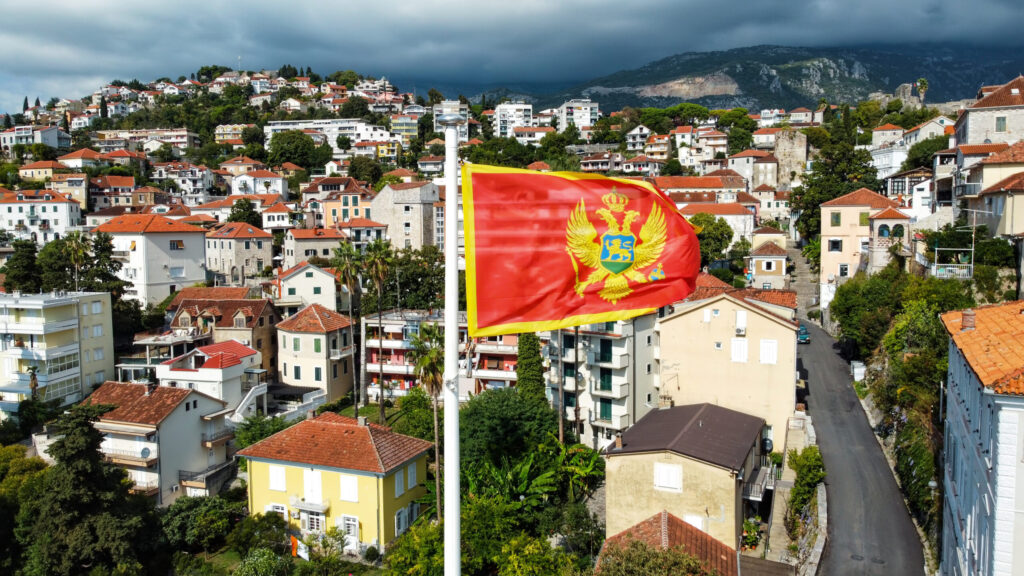
Beyond politics, the economics are straightforward. Montenegro’s economy grew 3.8 percent in 2025, powered by €2.1 billion in tourism revenues. Construction is booming as the country modernises its infrastructure in line with EU accession requirements. Hotels, resorts, marinas, and logistics hubs are being built across the Adriatic coast. All of this activity creates jobs — and Montenegro simply does not have enough local workers to fill them. In Budva, the country’s most visited resort town, the Restaurant Association has already flagged a shortage of at least 5,000 seasonal workers for summer 2026. That is one town. The gap is national.
Where the Jobs Are: Sectors Your Clients Can Enter
Montenegro’s labour gap is concentrated in sectors that directly match the profiles of workers your agency typically places. This is not a market requiring advanced qualifications or specialist skills. It is a market hungry for motivated, reliable, and legally documented workers ready to fill critical roles in a fast-growing economy.
- Hotel and resort staff
- Waiters, bartenders, cooks
- Housekeeping and cleaning
- Beach and pool attendants
- Reception and guest services
- General construction labourers
- Concrete and masonry workers
- Road and civil works crews
- Landscaping and site workers
- Logistics and warehouse roles
- Seasonal harvest workers
- Olive and citrus farm labour
- Food processing support
- Livestock and poultry care
- IT and tech specialists
- Healthcare workers
- Simplified permit procedure
- Priority application processing
Montenegro Just Rewrote Its Immigration Rules — In Your Favour
One of the most significant and underreported developments of early 2026 is Montenegro’s sweeping update to its Foreigners Act, which entered into force in January 2026. For agencies and their clients, the changes are almost entirely positive. Understanding them gives your agency a concrete edge when speaking to employers and applicants alike.
The single biggest change is the full digitalisation of residence and work permit applications. Where applicants previously had to queue at government offices with stacks of physical paperwork — a process that could stretch across weeks — applications can now be submitted electronically through the Ministry of Interior’s dedicated system. Processing times have shortened significantly, and applicants can track their case status online. For agencies managing multiple placements simultaneously, this is a substantial operational improvement.
- Online permit applications now accepted
- Expired passports no longer block renewals
- IT and healthcare workers get fast-track permits
- Employer must register worker within 24 hours of permit issuance
- Minimum salary: €600–€800 net/month depending on education level
- Temporary Residence & Work Permit (up to 1 year, renewable)
- Seasonal Employment Permit
- Personal Work Permit (for long-term residents)
- Contracted Services Permit
What Documents Does Your Client Need?
Montenegrin work permit applications follow a structured document checklist. Any missing or poorly prepared document can trigger delays or refusals. This is where agencies that work with a professional documentation partner have a clear advantage over those trying to manage paperwork alone.
- Valid passport (full validity during stay)
- Signed employment contract
- Proof of qualifications (diplomas, certificates)
- Police clearance certificate (apostilled)
- Health insurance proof
- Passport-size photographs
- Certified document translations into Montenegrin
- Company registration certificate
- Tax and social security compliance proof
- Sector-specific operating licences
- Job vacancy justification (labour market check)
- Work permit application to Employment Agency
- Financial statements (where required)
The Strategic Case: Why Montenegro Beats the Crowded Markets
Let’s be direct. Germany is harder to enter than it was two years ago. Poland is saturated. Portugal has a growing queue. These are not reasons to abandon those markets — they are reasons to add Montenegro to your portfolio. The agencies winning in 2026 and beyond are not those with a single country offering. They are the ones who can look a client in the eye and say: we have options, and we know which option is right for you.
Montenegro offers something that overcrowded markets cannot: speed, relatively simpler documentation requirements for unskilled roles, lower salary thresholds, and an employer community that is actively searching for foreign labour rather than tolerating it. The country uses the Euro, which removes currency risk for your clients’ salary calculations. It is a NATO member with a stable political trajectory toward the EU. It offers a quality of life — Mediterranean climate, low crime, affordable cost of living — that makes retention easier once workers arrive.
For agencies placing workers from the Philippines, Bangladesh, India, Nepal, Nigeria, or Kenya, Montenegro is not a compromise destination. It is a smart destination. And right now, before the market gets crowded, it is a destination where your agency can build employer relationships, deep expertise, and a reputation that will pay dividends for years.
How Macro Work Visa Supports Your Montenegro Placements
At Macro Work Visa, we are a B2B documentation service, not a recruitment agency. We do not compete with you for clients. We work for you — preparing the full set of employer-side and worker-side documents your placements require, ensuring every certificate is correctly apostilled, every translation is certified, and every application is submitted without the errors that cause visa refusals and client complaints.
We operate across 10+ European countries, and our team in Warsaw is tracking Montenegro’s regulatory changes in real time. If the January 2026 Foreigners Act amendments affect how documents need to be prepared or submitted, we update our processes before it becomes your problem. For immigration agencies looking to expand into Montenegro without the overhead of building in-house expertise, that is exactly the kind of partner you need.
Montenegro will not stay undiscovered for long. The combination of EU accession momentum, a digital-first permit system, record labour shortages, and a booming economy is already drawing attention. The agencies that establish themselves in this market in 2026 will be in an entirely different competitive position by 2028. The question is not whether Montenegro is worth adding to your portfolio. The question is whether you want to add it before your competitors do.